$25 Off $200+ Order with Code SAVE25
$25 Off $200+ Order with Code SAVE25



Item# MM80-003563
$96.00 $86.95
The shimmering design of the Metropolitan Museum Tiffany Peacock Feather Shawl was inspired by the Louis Comfort Tiffany (American, 1848–1933) iridescent glass vase produced by Tiffany Glass and Decorating Company in 1900. The piece stylizes the "eye" of the peacock feather with rich iridescent hues gradating to a light blue surrounding the eyes. Louis Comfort Tiffany was often compelled by the natural world, and this particular motif was used in some of his most important architectural commissions and ornamental vessels. Wool/silk/viscose blend 79”L x 28”W. Fringe: 1".
Please note: This item does not qualify for discount coupon offers.
$10.95 Flat Rate Ground Shipping eligible within the contiguous U.S.
$74.95 $120.00
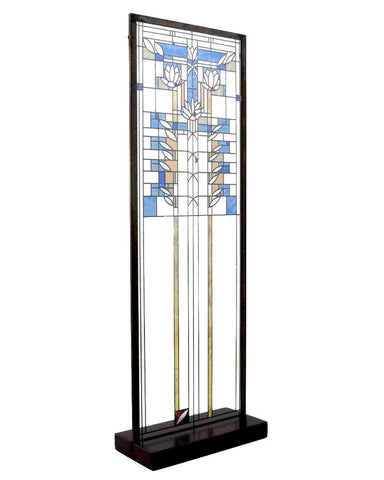
This Frank Lloyd Wright Waterlilies Stained Glass, depicting flowers and lily pads floating in a tranquil pool, is adapted from an unrealized leaded stained glass window designed by Wright circa 1893-95. On this glass panel, enamel colors are individually applied to a single sheet of glass which is then kiln fired to permanently fuse the enamels to the glass. The...
$79.95 $86.00
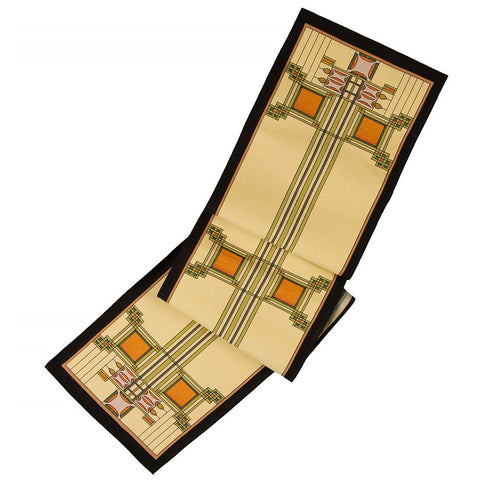
The design of this Sullivan Table Runner is based on a window in the National Farmer's Bank, Owatonna, Minnesota, 1908, designed by Louis Henry Sullivan, with decorative elements by George Elmslie. It was the first of Sullivan's "jewel box" bank designs. A design from an important historic architectural building, brought to life for today’s modern homes with extraordinary weaving and...
$63.95 $88.00
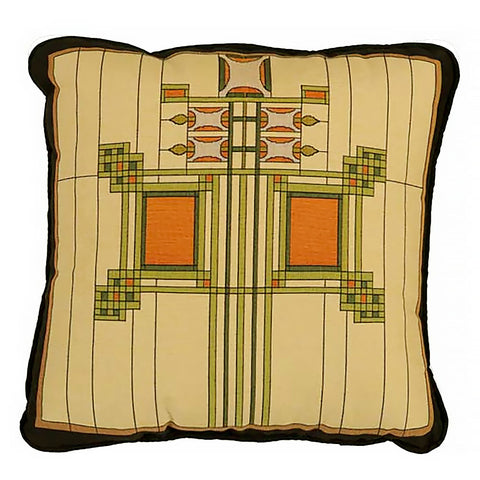
The design of this Sullivan Pillow is based on a window in the National Farmer's Bank, Owatonna, Minnesota, 1908, designed by Louis Henry Sullivan, with decorative elements by George Elmslie. It was the first of Sullivan's "jewel box" bank designs. A design from an important historic architectural building, brought to life for today’s modern homes with extraordinary weaving and depth...
$79.95 $86.00
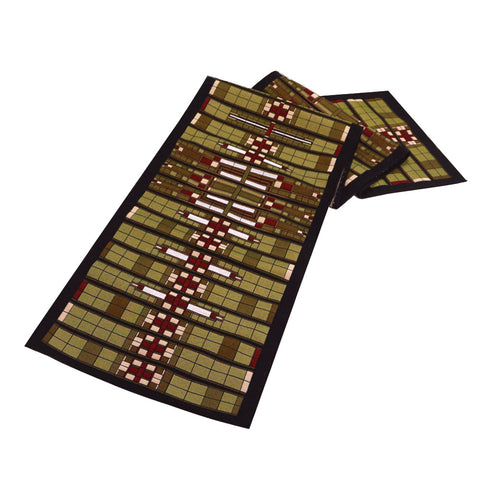
The Louis Sullivan Skylight Tapestry Table Runner is inspired by a window designed by Louis Henry Sullivan. The window is from a branch of the Farmers Merchant & Union Bank, 1919.For a young Frank Lloyd Wright, his years working under Louis Sullivan, February of 1888 to June of 1893, undoubtedly shaped his design philosophy. Wright, who rarely acknowledged any direct...
Sign up to get the latest on sales, coupons & new releases
© 2026 Maclin Studio. All rights reserved.
Maclin Studio, 219 N. Milwaukee Street, Milwaukee, WI 53202. Ph: 414.276.4750. Email: service@maclinstudio.com


